The Decision Matrix: Built-In Kitchen Units vs. Countertop Models
When a microwave stops heating or begins sparking, deciding between repair and replacement requires evaluating the appliance’s physical installation and replacement expense.
Premium built-in microwaves integrated into custom kitchen cabinetry represent a substantial investment. Replacing a built-in unit involves not just purchasing a high-cost appliance, but also matching precise cut-out dimensions, ventilation clearances, and trim kit finishes.
For built-in units, repairing the internal electronics, replacing safety switches, or swapping magnetron tubes is almost always far more cost-effective than kitchen remodeling. If you know about an earlier repair to the microwave, explain what was done and whether symptoms changed afterward. Do not assume the current fault has the same cause before inspection.
To assess repair from your perspective, prepare a description of what changed in normal use and whether the light or turntable worked when you noticed the issue. Describe the visible door condition without touching internal parts. Keep available appliance information and service documents, and explain your household needs before discussing options. Do not run it empty or reuse it to demonstrate sparks or a burning smell, and do not open the casing to search for the cause. Ask for an explanation of the inspection findings and proposed work, then base your decision on your actual needs rather than a guessed faulty part.
Common Microwave Faults That Are Completely Worth Repairing
Crucial Safety Warning: Why DIY High-Voltage Repair Is Strictly Prohibited
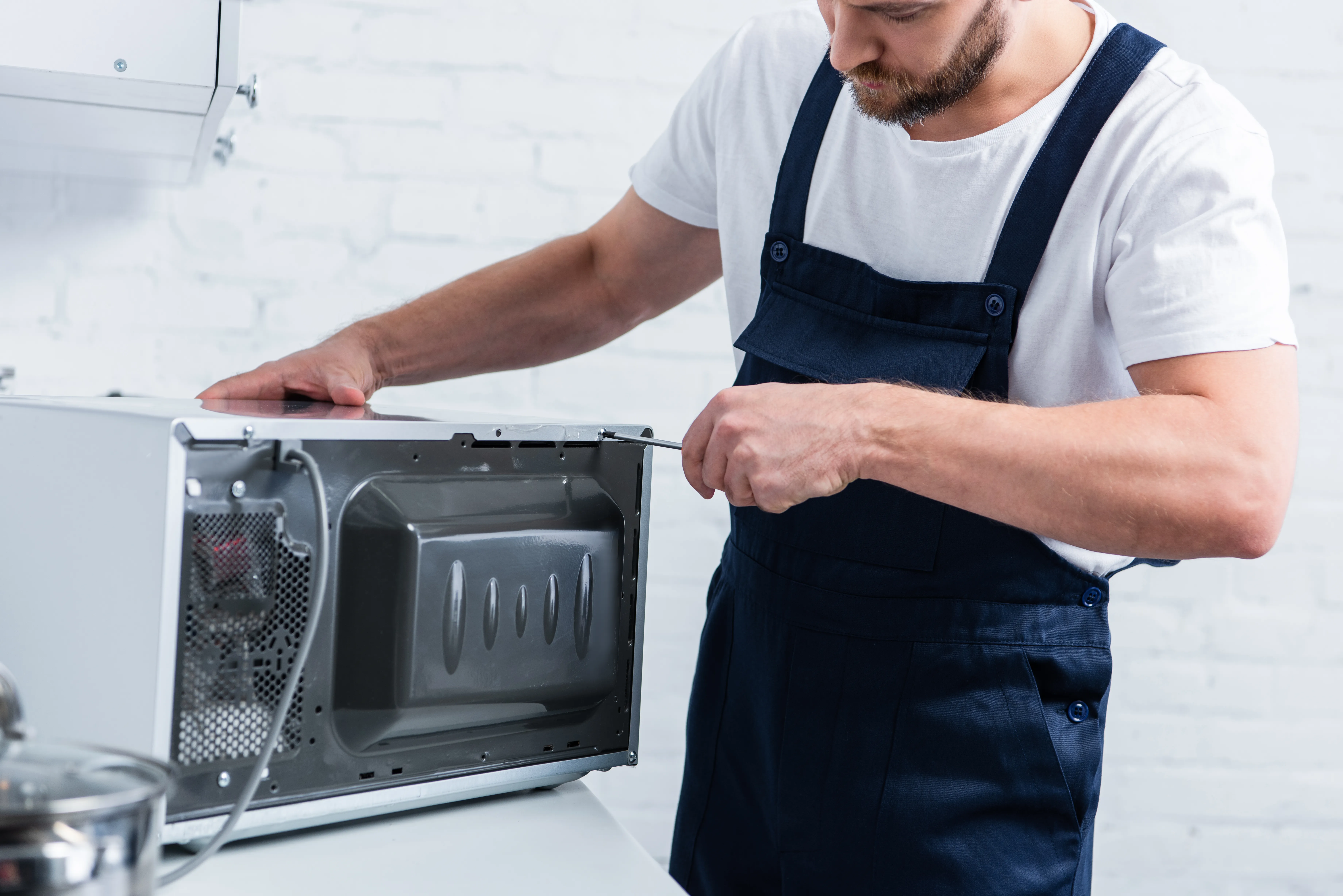
A microwave oven is among the most hazardous household appliances to open, containing high-voltage components that can deliver a fatal electric shock even when unplugged from the wall.
Never open a microwave casing, even after unplugging it; internal parts can remain hazardous. Leave repair to a professional and do not touch internal components. Touching internal capacitor terminals without high-voltage discharge tools can cause severe cardiac arrest or fatal electrocution.
Homeowners must strictly confine their care to surface cleaning, replacing the removable glass tray, wiping food grease from the mica window, and inspecting door seal cleanliness. For microwave repair decisions, the appliance is assessed at your location. The technician explains the fault and proposed work, then provides a firm quote after inspection.
Professional Microwave Diagnostics and Component Replacements by RMAN
During inspection, ask about the fault found in the microwave and the work proposed to address it. Request a clearer explanation before agreeing if anything remains unclear.
Bookings placed before noon are serviced on the same day across Jeddah, backed by a written service warranty and 24/7 technical customer assistance.
Keep observations about microwave repair decisions available to the person receiving the technician if visit arrangements change. Record what you saw and what you did after the issue appeared, including known observations from other appliance users. Do not ask anyone to reproduce the fault or touch a connection to complete the record. Mark uncertain details clearly so they are distinguished from direct observations, then discuss the findings and firm quote before deciding about repair.